
What would it look life if governments everywhere made it a top priority to prevent the intense suffering of all sentient beings?

Risks of future suffering due to totalitarianism and conflict
We may be at a tipping point in the history of humanity. The values and political structures that dominate in the coming years may have far-reaching consequences. In particular, there is a risk of locked-in totalitarianism where intense suffering is perpetuated, facilitated through advanced AI that allows uncompassionate regimes to maintain their grip on power. Global cooperation on conflict resolution and on addressing various sources of suffering might become more difficult or impossible, leading to potentially huge amounts of extreme suffering to biological beings and/or artificial sentient beings, by design or as a consequence of other goals. Risks of such astronomical suffering have been termed “s-risks”. While technical approaches to reducing such risks are needed, they may be inconsequential without the universal political will to address these risks.
Promoting compassionate governance
In contrast, the lock-in or at least long-term stabilisation of a system that seeks to minimise intense suffering and nurture thriving would be idyllic. To this end, it is essential not just to promote a culture of compassion, but to promote mechanisms and incentives that lead towards depolarisation, stable cooperation and the meeting of needs worldwide. Unaddressed needs are arguably one of the main sources of dissatisfaction and conflict in our world. Initiatives that promote concrete strategies and principles for positive systemic change are more urgent than ever. In particular, we believe that citizens’ assemblies represent an important model for cooperative decision-making at all levels of governance.
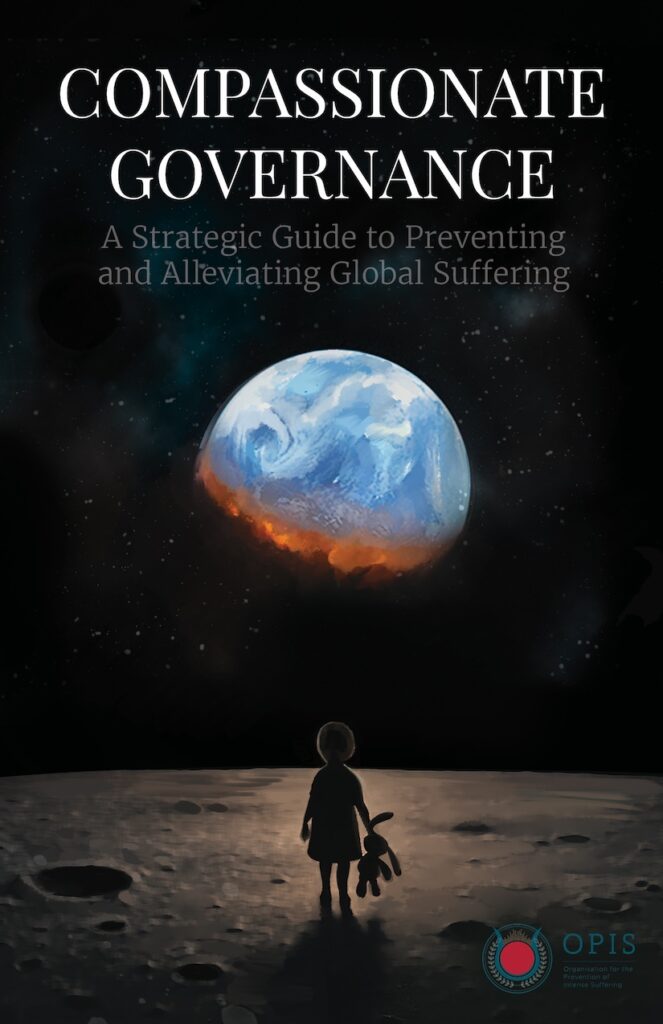
The OPIS team researched and produced a publication titled Compassionate Governance: A Strategic Guide to Preventing and Alleviating Global Suffering, which we released and began circulating in June 2025. The guide taps into the wisdom from a range of disciplines and extracts some of the key principles and ideas needed to shift towards a more cooperative, needs-based global system that values the wellbeing of all sentient beings. It contains some core ethical principles and a vision for the future, proposes concrete, evidence-based approaches to better organising ourselves globally, and makes a range of policy prescriptions aligned with compassionate governance and designed to address specific sources of suffering.
This 3-page concept note provides some additional background thinking behind this project.