

Suffering metrics
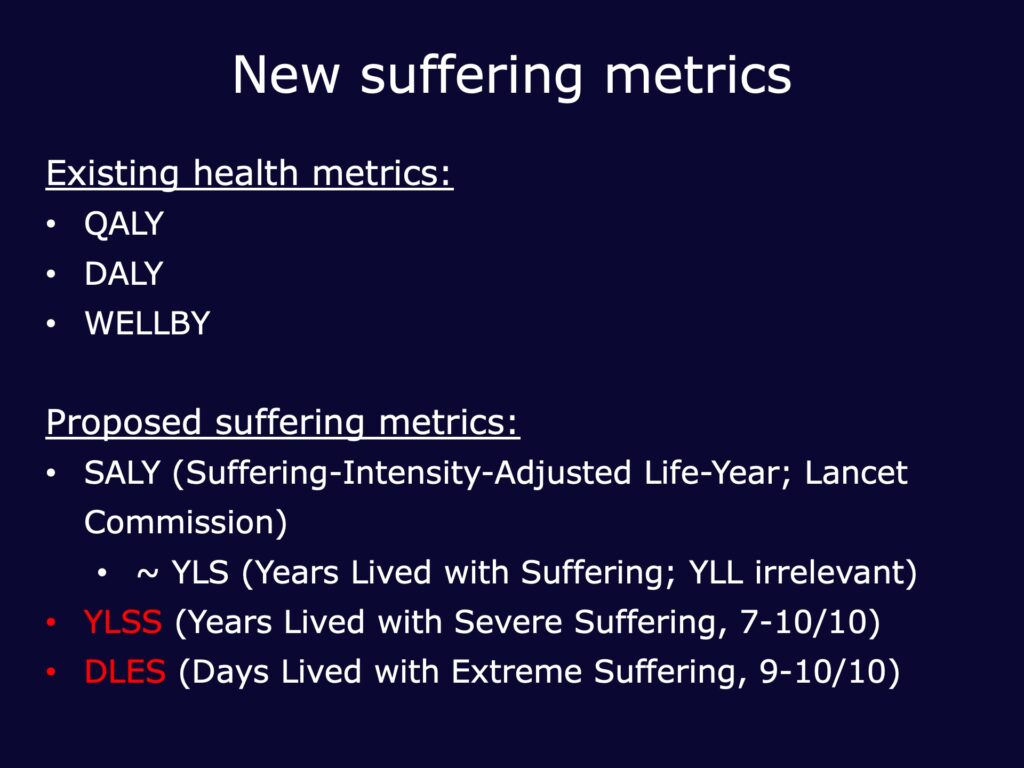
Preventing intense suffering is arguably the most important goal of compassionate governance and policy-making. It is therefore essential that this be reflected in the metrics used for decision-making and tracking progress. OPIS advocates for the establishment of suffering metrics to specifically capture severe and extreme suffering, such as Years Lived with Severe Suffering (YLSS) and Days Lived with Extreme Suffering (DLES). The case for these suffering metrics, including their advantages over existing health metrics such as the QALY and the DALY, which they could be used alongside, was made in The Tango of Ethics (2023). The relevant excerpt is available here.
Suffering overview
We are currently working on a quantitative overview and visualisation of world suffering, including both humans and non-human animals. As part of this study, we launched a survey to assess intensity and duration of suffering in humans across a range of conditions and situations. The survey also asked questions about the nature of the suffering – including physical pain, other physical symptoms and/or psychological suffering – and any measures that were found to be effective in relieving it. Our goals include raising awareness of the scale of suffering, identifying particularly intense suffering that may be neglected, testing the suffering metrics we are proposing, and promoting effective policies that can be taken to address each source of suffering.
An analysis of the results of the survey can be found in this post on the EA Forum from December 2025.
A 2026 open-access paper in the Cambridge Journal of Healthcare Ethics, “From Mollusks to Machines: An Ethical Framework Focused on the Urgency of Extreme Suffering“, argues for the adoption of the suffering metrics described above.