
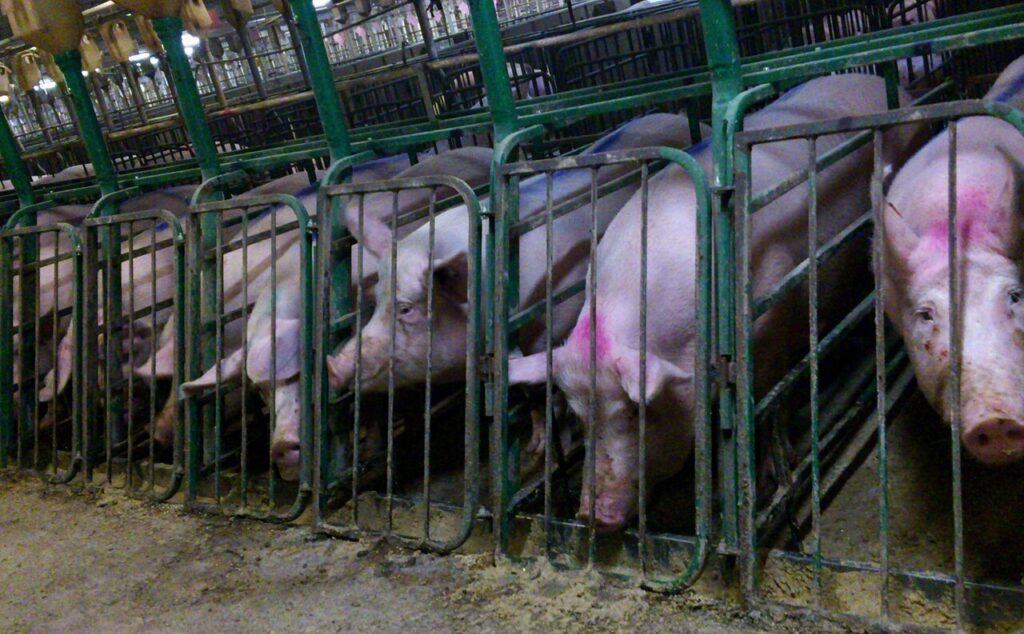
Humans have created a massive industry worldwide that treats animals with a staggering lack of compassion, seeking to squeeze as much profit out of them as possible. The sheer scale of it all makes the abuse and torture of animals on our planet a moral catastrophe of unfathomable proportions. About 80 billion land animals are raised each year for the consumption of their meat, milk, eggs, skin, fur and other products. Most of them (ca. 80%) are raised on so-called factory farms where they are treated as commodities and raised under mostly horrible conditions that cause immense suffering: being packed together, often in filthy enclosures, sometimes confined to small cages where they can’t turn around, without stimulation or joy, often intentionally maimed, with open wounds and other injuries left untreated. Their wretched lives end at slaughterhouses where they experience their final moments in terror.
In addition, each year over 100 billion fish – vertebrates with sophisticated brains who also have the capacity to feel pain and emotions – are raised in intensive fish farms at very high densities, and then often killed by asphyxiation. And approximately 1 trillion wild-caught fish are dragged from the ocean in huge nets and left to die of asphyxiation. To that we can add the hundreds of billions of invertebrates that are consumed, including octopuses, lobsters, crabs and shrimp, all of whom undoubtedly experience pain and suffering when they are trapped, immobilised and killed.
Especially large-scale producers wilfully misrepresent the conditions of the animals they keep captive, using fairytale images of happy animals that have nothing to do with reality. “Free range” chickens are often kept indoors at high density with only trivial access to the outdoors through a small door. But consumers also readily accept these false narratives in order to justify their habits.
The abuse and torture of animals on our planet is a moral catastrophe of unfathomable proportions.
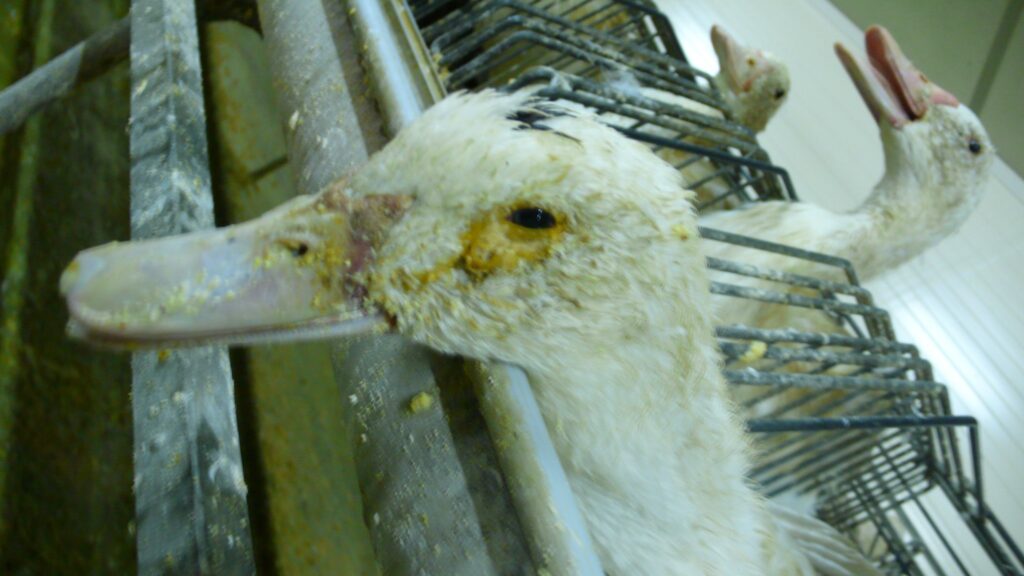
While our ancestors also consumed animals as part of their diet, we now have the ability to eat healthily without needing to cause harm to animals (see our information-rich page on plant-based eating). There are a huge number of plant-based food choices available, including many meat and dairy substitutes that closely resemble animal products in taste and texture. Unfortunately, most people still put their pleasure above the suffering of animals and are resistant to changing their habits. Many are reluctant to watch videos, including from undercover investigations by groups such as Mercy for Animals and L214, that portray the cruel reality that animals endure. The truth makes for uncomfortable viewing.
Cultured meat grown from animal cells without causing harm to live animals is a relatively recent technology that represents a huge opportunity to provide essentially the same product without the suffering, and the costs are likely to become competitive in the coming years. Many animal rights activists have hope that this technology will finally lead to an end to animal agriculture. A challenge is that powerful animal agriculture lobbies pressure governments to prevent investigations and the truth from coming out about how animals are treated, and to institute bans to prevent animal-free substitutes from reaching the market.
OPIS is a member of the Plant Based Treaty and a signatory via our Executive Director of the Montreal Declaration on Animal Exploitation. We take an explicitly anti-speciesist stance: suffering of similar intensity matters regardless of who is experiencing it and their outward appearance. OPIS advocates for an end to factory farming and to the abuse and torture of animals in other ways, and explicitly supports the following measures, among many others, with these goals in mind:
- End subsidies that make animal products cheaper than plant-based equivalents
- Plant-based options in all government-run facilities
- Financial support for the development of cultured meat, dairy and eggs
- Education in schools to nurture empathy for all sentient beings
- Legal protection for investigations that expose animal abuse
- Support for farmers who switch from animal agriculture to plants
- Stringent welfare standards for animals
- Stunning before slaughter of both land animals and fish
- Giving animals an explicit voice in having their needs taken into account when drawing up new legislation, and in the deliberative process of citizens’ assemblies
Our publication Compassionate Governance provides a more complete list of measures that we support.